Two miles north of modern Salisbury, atop a windswept chalk hill, stand the earthwork ramparts of Old Sarum: an Iron Age hillfort turned Norman castle turned cathedral city, now remembered chiefly as the most notorious "rotten borough" in British parliamentary history. From 1295 until 1832, this uninhabited ruin retained the right to send two members to the House of Commons.
From Sacred City to Ghost Town
The story of Old Sarum begins long before its parliamentary notoriety. The site was first fortified in the Iron Age around 400 BC, controlling the intersection of two trade routes and the River Avon. Following the Norman Conquest of 1066, William the Conqueror's forces built a motte-and-bailey castle there in 1069, establishing the settlement as a strategic stronghold.
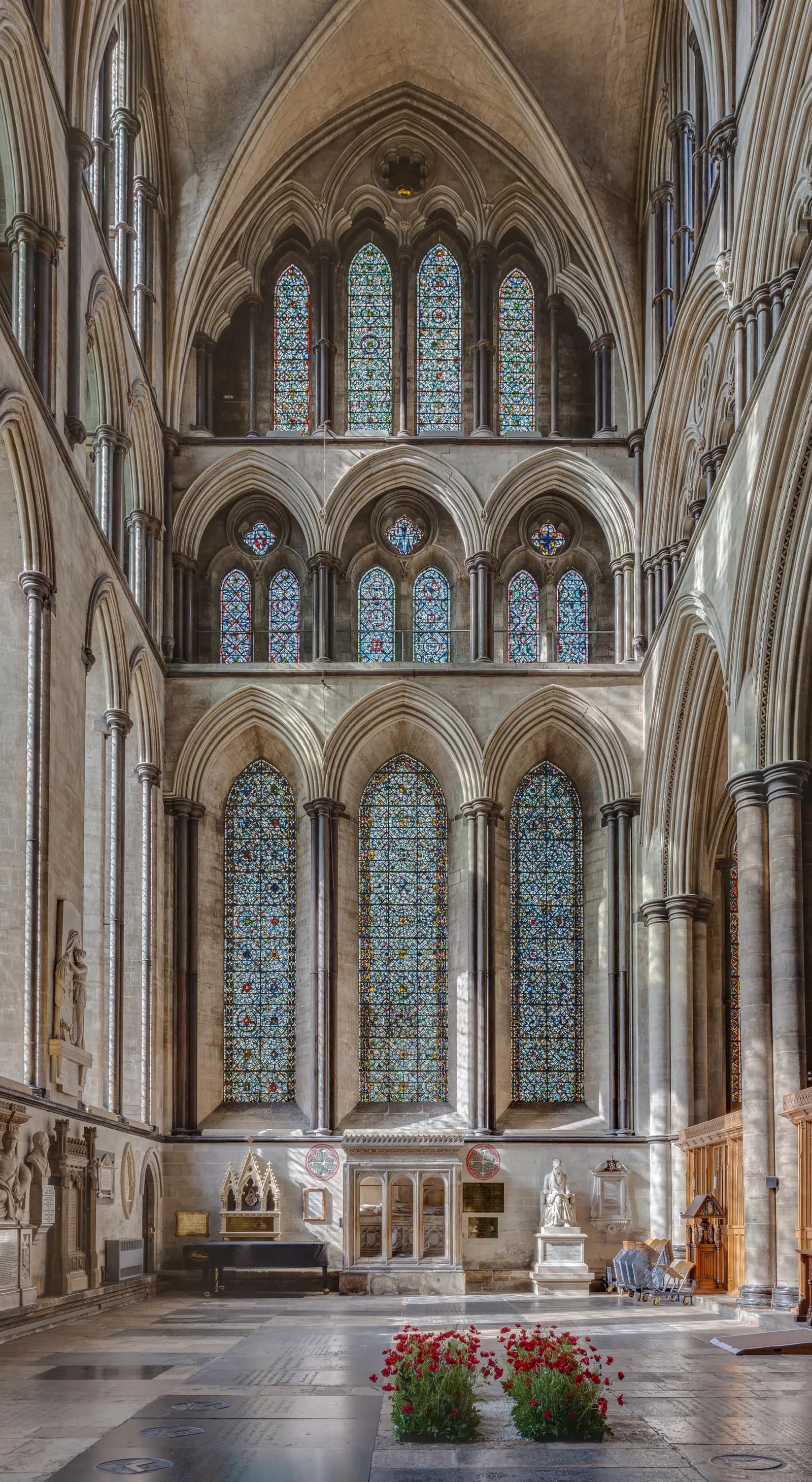
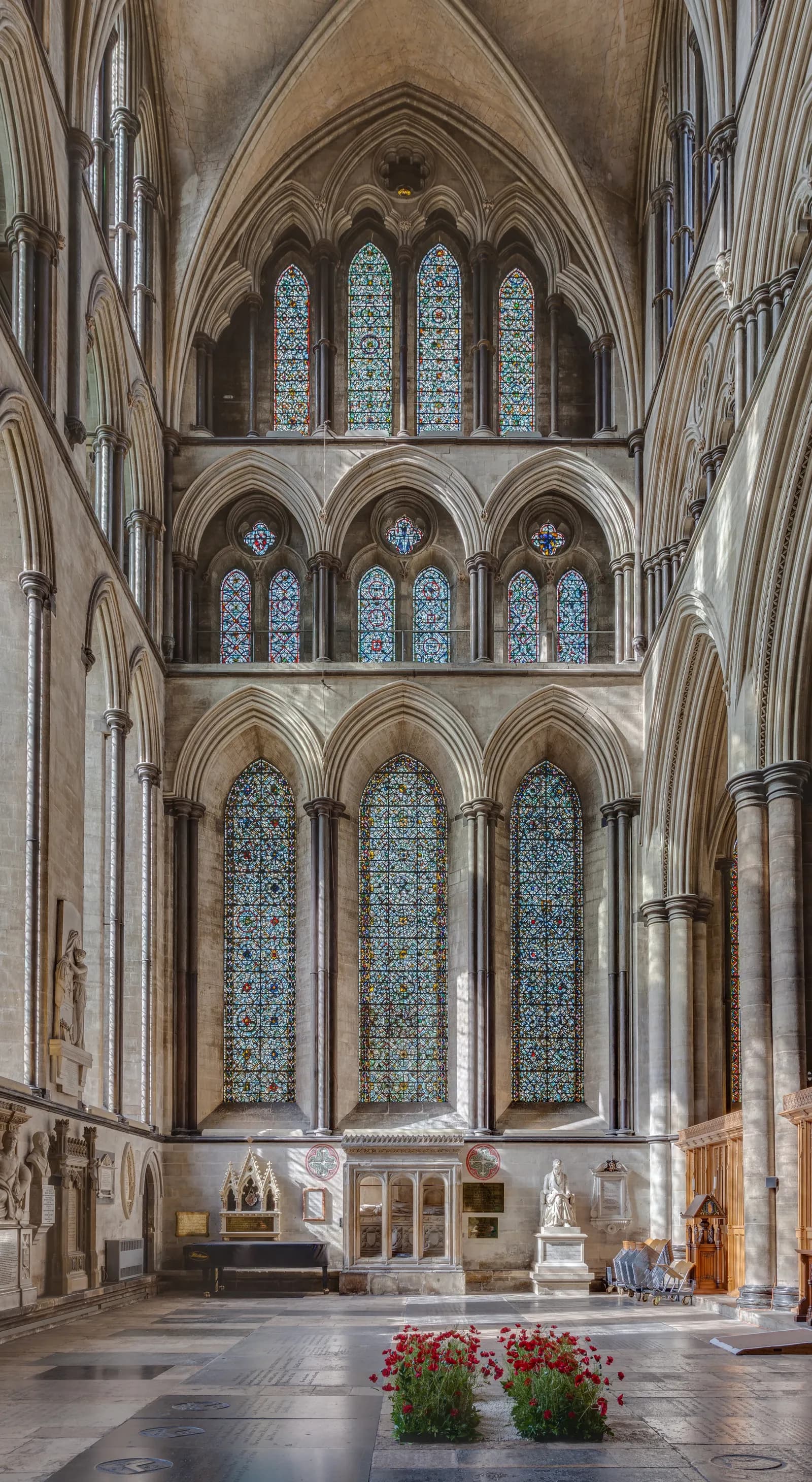
In 1075, the Council of London established Herman as the first bishop of Salisbury, and construction began on a cathedral at Old Sarum. The cathedral was consecrated on 5 April 1092, though it suffered extensive damage in a storm just five days later.
The seeds of Old Sarum's eventual decline were sown in its very location. A late 12th-century canon, Peter of Blois, described his prebendary as "barren, dry, and solitary, exposed to the rage of the wind." He characterised the cathedral as "a captive on the hill where it was built, like the ark of God shut up in the profane house of Baal."
Between 1217 and 1218, Bishop Herbert Poore received permission from Richard I to relocate the cathedral due to water shortages, conflict with the castle garrison, and the damaging winds. A wooden chapel dedicated to the Virgin Mary was begun on Easter Monday 1219 near the River Avon, and on 28 April 1220, the foundation stone of the new stone cathedral was laid. By 1226, the former cathedral at Old Sarum was formally dissolved.
In 1322, Edward II ordered the castle's demolition. Inhabitants gradually dismantled the old buildings, using the stone to construct Salisbury Cathedral and the new city below. By 1514, when Henry VIII sold the castle grounds, the hilltop settlement had effectively ceased to exist.
The Rotten Borough
Yet Old Sarum's parliamentary representation continued. Since 1295, during the reign of Edward I, the settlement had held the right to send two members to the House of Commons. This right persisted even after the cathedral's dissolution and the city's abandonment.
The constituency operated under the burgage franchise system. The right to vote belonged to the inhabitants of designated houses, or burgage tenements, within the former borough. A landowner could nominate tenants for each burgage plot, and these tenants were not required to live there. In fact, from at least the 17th century, Old Sarum had no resident voters whatsoever.
By 1831, the year of the last election held there, the constituency had exactly eleven voters. All were landowners who lived elsewhere. The entire electorate could be accommodated within a temporary booth erected in a cornfield beneath a tree marking the former town boundary. Contemporary accounts noted that "not a vestige" of the old town remained standing within living memory.
The Pitt family owned the borough for many years, using it as a "pocket borough" to return members favourable to their interests. In 1735, William Pitt the Elder, later 1st Earl of Chatham, sat as MP for Old Sarum. Other notable members included William Gerard Hamilton (1768), Nicholas Vansittart (1802), and Stratford Canning (1828).
In 1802, Thomas Pitt, 1st Baron Camelford, sold the borough to the Earl of Caledon for £60,000. This sum was extraordinary given that the land and manorial rights generated only £700 per year in income. The transaction illustrated the immense value placed on parliamentary influence under the unreformed system.
The Reform Act and Abolition
Old Sarum became a powerful symbol for reformers campaigning to overhaul Britain's electoral system. While major industrial cities such as Manchester and Birmingham had no parliamentary representation, this uninhabited hilltop returned two MPs. The discrepancy fuelled demands for change throughout the early 19th century.
The Reform Act 1832, which received royal assent on 7 June, abolished 56 of the smallest boroughs completely and reduced representation in 47 others. Old Sarum was subsumed into an enlarged borough of Wilton, its 600-year parliamentary history brought to a close.
What Remains Today
Old Sarum is now an English Heritage property, situated on Castle Road, Salisbury, Wiltshire, SP1 3SD. The site is open daily from 10am to 5pm, with last entry at 4.30pm.
Visitors can explore the exposed foundations of the medieval cathedral, the Norman central motte, and the outer Iron Age ramparts that still encircle the hilltop. In 2014, a geophysical survey revealed the remains of a royal palace measuring 170 by 65 metres, along with the street plan of the medieval city that once stood there.
The site holds significant protected status. It was among the 26 English locations first scheduled under the Ancient Monuments Protection Act of 1882, the earliest such legislation in Britain. It was also designated a Grade I listed site in 1972.
Nearby, the modern development of Old Sarum continues to grow. Housing developments built between 2008 and 2016 added 800 homes, and the Longhedge Village development, begun in 2018, will contribute a further 750 homes northeast of the monument. The Old Sarum Airfield, a grass strip, remains operational by prior arrangement.
A Cautionary Tale
The story of Old Sarum serves as a reminder of how Britain's democratic institutions evolved. The contrast between its medieval significance as a religious and military centre and its later incarnation as a symbol of electoral corruption offers a compelling narrative of institutional decay and renewal. Today, the windswept ramparts overlook a Salisbury that has long since surpassed its ancient predecessor, while the parliamentary seat that was once bought and sold is now consigned to history.